
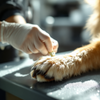
Professional Dog Paw Care Guide: Year-Round Grooming, Protection & Paw Health
, 31 min reading time
, 31 min reading time
A comprehensive professional guide to dog paw care for groomers and pet owners. Covers seasonal paw protection, nail health, grooming salon protocols, breed-specific paw care, real case studies and expert answers to common paw problems—designed for real dogs and real grooming work.
Dog paw care is not a small grooming detail. It is one of the most practical, measurable foundations of canine comfort, movement quality, posture, and long-term musculoskeletal health. Paws are the only part of a dog’s body in constant direct contact with the environment—heat, ice, salt, moisture, rough surfaces, allergens, microbes, and chemical residues all end up here first.
When paws are uncomfortable, dogs rarely “complain” in an obvious way. Instead, they adapt: they change stride length, shift weight, tense shoulders, resist standing still, pull paws away, lick between toes, or suddenly dislike nail trimming. What looks like a grooming-behavior problem is often a comfort problem. For professional groomers, paw care is therefore not only about hygiene; it is part of safe handling, predictable workflow, and calmer, higher-quality results. For dog owners and pet lovers, a simple paw routine prevents many avoidable issues—cracks, infections, soreness, excessive licking, slipping, and chronic irritation that quietly affects daily life.
This Groomica.eu guide is written for both professional dog groomers and dog owners. It covers: what healthy paws should look and feel like, how to prevent seasonal paw problems across all four seasons, how to build a repeatable salon paw-care protocol, what owners can realistically do at home, breed-specific considerations for 10 popular breeds, long-form case studies, and a complete FAQ with real answers.
Many dogs live with low-grade paw discomfort for weeks or months without obvious limping. Dogs are highly adaptive: they shift weight away from sensitive pads, shorten stride, rotate toes slightly, or change how they land. Those “small” compensations can influence shoulder tension, spinal posture, and joint loading—especially in large breeds, senior dogs, athletic dogs, and dogs recovering from orthopedic issues.
In a grooming salon, paws are directly connected to safety and handling. A dog with sore pads or overgrown nails cannot stand comfortably on the table. That discomfort may show up as fidgeting, sitting, sudden flinching during paw work, or resistance to drying and finishing. Groomers often spend extra time trying to “calm” a dog when the real solution is to reduce pain triggers and improve paw comfort. When paws are stable and comfortable, many dogs tolerate the full groom better—standing longer, allowing feet scissoring, and accepting nail work with less tension.
For owners, paw care is often misunderstood because pads look tough. But healthy paw pads are not hard like plastic—they are resilient, slightly elastic, and capable of recovering after exposure. When pads become too dry, they crack; when they remain too wet, skin softens and infections become more likely. Between-toe skin is thin and warm, and when moisture stays trapped there, yeast and bacteria thrive. The goal is not “perfectly clean” paws; the goal is a balanced barrier: clean enough to remove harmful residues, dry enough to prevent overgrowth, and protected enough to tolerate real-world surfaces.
When paw care becomes routine rather than reactive, many “mystery” problems improve: excessive licking, chronic redness between toes, repeated yeast flare-ups, slipping on floors, nail-related posture issues, and grooming intolerance around the feet. Paw care is preventive health in its most practical form.
A dog’s paw is a complex structure built to absorb impact, provide traction, and protect internal tissues. Understanding the basic anatomy helps groomers make safe trimming decisions and helps owners recognize early warning signs. The paw is not just pads and nails—interdigital skin, fur between pads, toe alignment, dewclaws, and weight distribution all matter.
Paw pads are keratinized skin with underlying fatty tissue. They provide traction and act like shock absorbers. Healthy pads are firm yet slightly elastic, without deep cracks, bleeding, thinning, or severe roughness. Seasonal stress can damage pads faster than owners expect, especially in city dogs exposed to salt, hot asphalt, or abrasive pavement.
The skin between toes is thin, warm, and often poorly ventilated—an ideal environment for yeast and bacteria if moisture builds up. Redness, odor, dampness, and persistent licking commonly originate here. Groomers often see interdigital irritation early, long before owners suspect an infection. Interdigital inflammation is also frequently confused with “allergies” when it is actually moisture and microbial imbalance.
Nails influence posture. Overgrown nails push toes upward and shift weight backward, changing stance and the mechanics of movement. Dewclaws are often ignored, but they can curl into the skin and become painful quickly. The goal is functional nail length that supports stable standing and natural movement—not extreme shortness achieved in one stressful session. In dogs with long quicks, nail correction is gradual and ethical across multiple visits.
Fur between pads can be protective in some breeds and climates, but excess growth can reduce traction, trap moisture, hold debris, and create matting pressure points. Correct trimming is breed-, lifestyle-, and season-dependent. The goal is balance: grip, hygiene, airflow, and comfort.
Many owners only look at paws when the dog is already licking or limping. Groomers, however, benefit from having a “healthy baseline” in mind—because early signs are often subtle. Healthy paws are not identical across all dogs, but the general indicators of health are consistent.
Healthy pads feel resilient and slightly springy, not brittle and cracked, and not overly soft and spongy. Interdigital skin is pale to light pink (depending on pigmentation), without angry redness, swelling, or a strong odor. Nails are short enough that the dog can stand with toes naturally aligned—not lifted by nail length—and the dog can walk without the sound of nails constantly clicking on hard floors.
One paw routine does not fit all seasons. Pads and interdigital skin face different risks in winter, spring, summer, and autumn. Many chronic paw problems come from using the wrong approach for the season—over-moisturizing when paws need resilience, under-drying when microbes dominate, or over-cleaning when the skin barrier is already irritated. The best paw care is seasonal: it changes slightly as the environment changes.
Winter is often the harshest season for city dogs. De-icing salts and chemicals strip the natural lipid barrier from pads, leading to dryness, sensitivity, and cracks. Ice and compact snow can create micro-cuts, and snow can wedge between toes, causing discomfort and even panic in some dogs.
For owners, the most effective winter routine is simple: after salt exposure, rinse paws with lukewarm water (not hot), then dry thoroughly—especially between toes. Aggressive wipes can worsen dryness by removing oils repeatedly. For groomers, winter is the season to assess pad texture carefully and educate owners about correct timing of protection. Heavy balms applied before walks can sometimes soften pads and increase chemical penetration. In many cases, light protection after exposure and proper drying is safer than thick occlusion before exposure.
Spring combines warmth and moisture—perfect conditions for yeast and bacteria. Wet grass, mud, puddles, and melting snow keep paws damp. Dogs with dense coat growth between toes are especially vulnerable because moisture stays trapped against the skin. Many springtime “allergy paws” are actually moisture-driven interdigital inflammation that becomes infected secondarily.
Owners should prioritize drying after wet walks. Groomers should prioritize airflow and coat management around the pads. Trim strategies that reduce moisture retention can be more preventive than any product. If there is a strong odor or persistent redness, a vet evaluation may be needed, but many early-stage cases respond well to improved drying and hygiene routines.
Summer paw injuries can happen quickly. Asphalt, concrete, sand, and artificial turf can reach temperatures that burn pads within seconds. Burns may not look dramatic immediately; pain often appears later as peeling, blistering, and sudden walking refusal.
Owners should avoid midday walks on hot surfaces and choose grass or shaded routes. A practical rule: if you cannot hold your hand on the asphalt comfortably, it is unsafe for paws. Groomers should recognize the signs of heat damage (tenderness, peeling, discoloration) and advise owners to shift walking routines. Over-cleaning in summer can worsen dryness; the goal is to keep pads resilient and avoid harsh stripping.
Autumn looks gentle, but wet leaves, mud, and rain reduce traction. Slipping increases strain—especially in senior dogs, heavy dogs, and dogs with weak hindquarters. This is also a transition season: paws adjust from summer dryness to colder, wetter conditions, and small cracks may appear as the barrier adapts.
Owners should watch for slipping and keep pad fur controlled for traction. Groomers can use autumn to reset nail and pad work and prepare owners for winter salt risks before winter begins. Autumn paw care is about stability: traction, balanced nails, and clean drying routines.
A repeatable paw protocol reduces surprises and improves safety. It helps groomers identify early problems before they become chronic. The aim is not to diagnose disease, but to recognize risk, adjust the grooming plan, and communicate clearly with owners. A professional protocol also prevents the common salon problem where paw work becomes rushed at the end of the groom—right when the dog is already tired.
Before bathing or trimming, observe how the dog stands and walks. Uneven weight distribution, pulling a paw away, or flinching may indicate pain. Inspect pads, interdigital skin, nails, and dewclaws. Gentle tactile assessment (temperature, swelling, tenderness) provides important clues.
Trim for traction and airflow without exposing skin unnecessarily. The safest approach is to trim flush with the pad surface and avoid deep scooping that can irritate skin. Breed matters: Poodles, Cockers, Doodles, and many companion breeds need more frequent pad-area trimming. Nordic breeds may need a more conservative approach to preserve natural protection. Calm handling matters: a small nick in the pad area can break trust and create long-term resistance.
Overgrown nails alter posture. The professional goal is functional length and stable toe alignment, not a dramatic “one-visit fix.” In dogs with long quicks, plan gradual improvement. Explain to owners that safe correction may take multiple visits. A grinder can help refine shape and reduce sharp edges, but noise and heat must be managed carefully to avoid stress.
Moisture between toes is one of the most common triggers for yeast and bacterial problems. After bathing, dry paws thoroughly, including interdigital spaces. Towel drying alone is often insufficient in dense coats. Use controlled airflow and moderate temperature. This step is crucial in spring, autumn, and any time a dog arrives with wet paws or lives in a wet climate.
Groomers should pause and recommend veterinary evaluation if there are open wounds, bleeding cracks, discharge, severe swelling, strong infection odor, or intense pain response. Attempting to “treat” medical issues is outside grooming scope and can worsen outcomes. Calm, welfare-based communication builds trust.
Professional grooming sets the foundation, but daily life determines paw health. Home routines should be simple and consistent. Over-cleaning can damage the barrier just as neglect can. Owners should aim for balanced hygiene and quick checks that catch early signs without turning paw care into a stressful event.
Look between toes, notice redness or odor, and observe whether the dog pulls away. Many dogs show discomfort by licking rather than limping. A one-minute check prevents weeks of irritation.
Rinse with lukewarm water after exposure to salt, mud, chemicals, or sticky residues. Avoid household disinfectants or harsh soaps. Dry thoroughly—especially between toes. Many “recurring” paw issues disappear once drying becomes consistent.
Balms can help with dryness and micro-cracks, but heavy daily use can soften pads too much. Use them strategically: after harsh exposure, at night, or during extreme dryness. If a dog’s paws smell strongly, are red between toes, or stay damp, balm is not the solution—drying and veterinary guidance may be needed.
Breed differences in structure, coat growth, weight, and lifestyle change paw needs. Below are practical grooming and home-care priorities for ten popular breeds. These are not stereotypes; they are the most common patterns groomers see in day-to-day work. Always adapt to the individual dog and its environment.
Labradors are active and often exposed to water, mud, and rough terrain. Pads can be tough, but interdigital moisture problems are common—especially if the dog swims and paws are not dried thoroughly. Nail length still matters: even active dogs can have overgrown dewclaws that owners overlook. In salon work, focus on dewclaw checks, interdigital inspection, and owner education about drying after water exposure.
German Shepherds’ posture and angulation make functional nail length especially important. Overgrown nails shift weight and may worsen compensation patterns. They are also often walked on abrasive surfaces. Groomers should watch for uneven nail wear (a sign of weight shifting) and advise owners to maintain nails consistently rather than only “when they look long.”
French Bulldogs often have compact paws and reduced airflow between toes. Skin can be sensitive, and owners sometimes overuse wipes, which increases dryness and irritation. Groomers should prioritize gentle handling, careful drying, and conservative product use. If there is chronic redness and odor, it often requires a vet plan, but drying routines almost always help reduce recurrence.
Cockers have dense fur and often trap moisture and debris around the pads. Spring and autumn are high-risk seasons. In the salon, pad-area trimming and thorough drying are essential. Owners frequently underestimate how quickly damp paw fur becomes a yeast environment. A “dry after wet walks” routine is often the biggest improvement.
Poodles have hair-like growth between pads that mats easily. Traction issues are common on smooth floors when pad fur grows long. Regular pad trimming and consistent nail work reduce slipping and prevent pressure points. Groomers should also check for sensitivity: poodles often tolerate grooming well, but once paw discomfort develops, they can become very reactive to nail work.
Yorkies have small paws where even mild nail overgrowth changes comfort dramatically. They also have fine, silky hair that can trap debris and form small mats around toes. Owners may not notice discomfort until the dog starts refusing paw handling. Frequent, gentle maintenance works better than infrequent heavy corrections. In the salon, keep paw work calm and predictable—Yorkies remember unpleasant paw experiences.
Goldens often combine dense coat with an active outdoor lifestyle. They collect debris easily (wet grass, leaves, sand) and may develop interdigital dampness if paws are not dried well. Pad fur management helps traction and hygiene. Many Goldens slip indoors when pad fur and nails are both slightly overgrown—small corrections can significantly improve stability.
Dachshunds’ body structure makes posture and traction especially important. Overgrown nails and slipping can increase strain on the spine and shoulders. Owners often focus on “back safety” but forget that paw mechanics influence how a Dachshund moves. Keep nails functional, reduce slipping risk, and educate owners on traction surfaces at home.
Huskies have natural protection and often tolerate cold well, but city winter chemicals can still damage pads. Avoid over-trimming protective fur if the dog regularly walks in snow. Focus on cleaning chemical residues and drying interdigital areas. Huskies can hide discomfort; subtle behavior changes and licking matter.
For mixed breeds, coat type and lifestyle matter more than labels. A doodle-mix may need poodle-like pad maintenance, while a terrier-mix may need more frequent nail checks. Use the same principles: traction, airflow, dryness, and functional nails.
Show grooming and pet grooming are not the same service, and paw care is one place where differences become obvious. In show grooming, coat presentation may require different trimming decisions around feet and pads. In pet grooming, comfort and traction usually come first. Problems happen when owners bring show expectations into a pet lifestyle without understanding the maintenance cost.
For show dogs, coat around feet may be maintained more fully for presentation. This increases the risk of moisture retention and slipping if the dog lives a normal active life. For pet dogs, trimming pad fur flush with pads is often the safest choice for traction and hygiene. The professional approach is to match the trimming decision to the dog’s real environment—not to a photo from a show ring.
If an owner asks for “show feet” on a dog who walks daily on wet grass and pavement, a groomer can offer a professional compromise: a cleaner foot outline while still trimming pad fur for airflow and grip. That compromise protects both aesthetics and welfare.
Paw care products are tools, not magic. Many chronic paw issues get worse because owners use too many products in the wrong order—wipes several times daily, thick balms before every walk, aggressive cleaning after every lick. Over-treatment can strip oils, soften pads, and irritate interdigital skin. A professional approach is to choose the smallest effective routine.
Balms can be valuable for dry pads, micro-cracks, and harsh winter exposure. However, heavy daily use can soften pads too much and reduce natural resilience. Best use is strategic: at night, after exposure, or during clear dryness. If there is odor, wetness, discharge, or significant redness between toes, balm is not a solution—drying and medical evaluation may be needed.
Wipes are useful for removing salt and dirt when rinsing is not possible. But daily wiping multiple times can strip natural oils and irritate sensitive skin. If a dog’s paws are consistently dirty after walks, it usually means the route and environment require a rinse + dry routine rather than constant wipes.
These should be used with veterinary guidance when infection is suspected. Owners sometimes self-treat yeast or bacterial problems with random antiseptics, which can mask symptoms and delay proper diagnosis. Groomers should stay within scope: identify warning signs, recommend veterinary evaluation, and focus on safe grooming adjustments such as drying and airflow.
Drying between toes is often more effective than any balm. Many spring and autumn paw problems improve simply because interdigital skin stops staying damp for hours. Owners who learn to dry paws well often see fewer infections and less licking.
In real salon work, paw care is rarely isolated. It affects timing, dog tolerance, and safety. Dogs with sore paws cannot hold posture comfortably. That discomfort can look like impatience, fidgeting, or resistance—especially near the end of the groom when the dog is already tired. The best workflow places paw checks early and avoids leaving all paw work for the last five minutes.
Groomers often detect paw issues early: uneven nail wear, slight interdigital redness, moisture smell after bathing, increased paw pulling, or repeated licking immediately after drying. These small signs identify where friction and moisture concentrate. Recording these observations in client notes helps track patterns and prevents repeated “surprises” every visit.
If a dog slips on the table, paw discomfort worsens and anxiety rises. Non-slip mats and controlled positioning are not optional for paw-sensitive dogs. Groomers should consider whether the dog needs short breaks, a different stance, or less time standing. In senior dogs, this can define whether the groom is successful and humane.
In some cases—very long nails, extreme sensitivity, or a dog with fear-based resistance—forcing full correction in one session is neither safe nor professional. A structured plan across two visits can be kinder and more effective: small nail reduction now, positive handling experiences, then refinement later. This approach protects the dog and the groomer’s safety.
Paw handling tolerance is learned early. Puppies that experience gentle, positive paw contact are far less likely to resist nail trimming and grooming as adults. Early conditioning is not about “doing everything”; it is about building a calm association with touch, pressure, and sound.
Owners often avoid touching puppy paws out of fear of causing discomfort. Unfortunately, avoidance creates hypersensitivity. A puppy whose paws are never touched learns that paw contact is strange and threatening. The result is often a young dog that fights nail trimming, making future grooming stressful for everyone.
A professional puppy plan uses short, neutral exposures: touch paws briefly, reward calm behavior, and stop before the puppy gets irritated. The goal is to build trust, not to “win” a battle. Groomers can help owners with simple guidance: hold a paw for one second, release, reward. Repeat. Over time, this creates tolerance that lasts years.
Senior dogs experience structural changes that make paw care more important than ever. Pads can thin and lose elasticity; joints become stiffer; balance decreases; nails overgrow faster when activity drops. Even small paw issues can heavily affect confidence and mobility. For older dogs, paw care is often the difference between “they still enjoy walks” and “they start refusing to move.”
In grooming, senior paw sensitivity commonly appears as sitting quickly, trembling during paw handling, refusing to stand for scissoring, or snapping during nail work. These are not personality changes—they are comfort signals. Groomers should shift priority from perfection to stability: safe stance, gentle pacing, controlled drying temperature, and breaks when needed.
If a dog has very long quicks, correction must be gradual. If a senior dog has arthritis, traction is critical. A senior groom protocol often includes a non-slip surface, a slightly shorter grooming time, and a conservative approach to foot trimming that avoids irritation. The highest standard of grooming for seniors is not the sharpest finish—it is the calmest, safest experience with minimal discomfort.
Client profile: 4-year-old French Bulldog, urban lifestyle, 3–4 walks daily on sidewalks, winter temperatures, frequent road salt exposure.
Initial problem: The dog began licking paws every evening. Owner increased wiping frequency and applied thick balm before every walk. Within two weeks the dog’s interdigital skin became red, damp, and smelly. Nail trimming became difficult because the dog pulled paws away and vocalized. Grooming appointments became stressful and longer.
What the groomer observed: Pads were slightly softened, not dry—suggesting over-occlusion. Interdigital fur was damp after bathing and needed extra drying. There was a strong yeast-like odor between toes and visible redness. The dog showed discomfort when pressure was applied near the toes.
Professional decision: The groomer explained that the current routine likely created a cycle: salt exposure + wiping/stripping + heavy balm occlusion + moisture trapped between toes. The solution was not “more product,” but a simpler and more precise routine focused on rinsing and drying, plus reducing occlusion.
Plan implemented:
Week 1 outcome: Licking reduced noticeably because paws stayed drier. The dog tolerated gentle paw handling slightly better because irritation started decreasing. Owner reported fewer “panic moments” after walks.
Week 3 outcome: After veterinary guidance and consistent drying, interdigital redness decreased significantly. Grooming became smoother. Nail trimming was possible with less resistance. The dog stood better on the table.
Long-term outcome (8 weeks): The family developed a sustainable winter routine that was realistic and calm. The dog stopped chronic licking. The groomer documented the plan in the client profile so every winter they can proactively adjust paw care before the problem returns.
Key lesson: Many winter paw crises are not caused by “lack of care” but by too much care in the wrong form. Correct timing—rinse, dry, minimal occlusion—often outperforms heavy product use.
Client profile: 5-year-old Yorkshire Terrier (Yorkie), indoor lifestyle, short walks, smooth floors at home.
Initial problem: Owner noticed the dog slipping on laminate floors and avoiding jumping onto the sofa. Grooming visits were irregular. Nails clicked loudly. The dog resisted paw handling and became nervous during nail work.
What the groomer observed: Nails were overgrown and curving. Quick length suggested long-term overgrowth. The dog’s toe posture was lifted slightly due to nail pressure. Pad fur had grown long and reduced traction.
Professional decision: The groomer explained that a single aggressive nail trim would be painful and unsafe. A gradual plan was needed: small reductions over multiple visits, plus better traction control by trimming pad fur and advising the owner on home surfaces.
Plan implemented:
Outcome (6–8 weeks): The dog walked with more confidence. Slipping decreased significantly. Nail trimming became less stressful because each session was small and predictable. The owner reported improved mobility and mood. Groomer notes confirmed better stance and improved toe alignment.
Key lesson: In small breeds, nail length changes comfort quickly. Consistency beats intensity: frequent small corrections create better welfare and better grooming cooperation.
Occasional licking can be normal, especially after a walk. Persistent licking—daily, focused on one paw, or paired with redness/odor—is usually a sign of discomfort or irritation. Check between toes for redness and smell, and check pads for cracks or tenderness. If licking is constant, if skin looks inflamed, or if there is discharge or strong odor, a veterinary evaluation is recommended.
Clean paws based on exposure, not on a fixed daily rule. If a dog walks on salted streets, muddy trails, or chemical-treated areas, rinsing after the walk is appropriate. If a dog walks on clean dry surfaces, there is usually no need for daily cleaning. Over-cleaning can strip natural oils and damage the barrier, leading to more sensitivity and cracking.
Wipes are useful when rinsing is not possible, but repeated wiping can irritate skin—especially if wipes contain strong cleansers. Rinsing with lukewarm water removes residue more effectively and is often gentler. If using wipes, choose mild, pet-safe options and avoid excessive friction between toes.
Usually not. Balms help in specific situations: dry pads, micro-cracks, harsh winter exposure. Daily heavy use can soften pads and make them more vulnerable to chemicals and abrasion. A good approach is strategic use: apply lightly at night during dryness or after harsh exposure. If the issue is redness, odor, or dampness between toes, focus on drying and veterinary guidance rather than balm.
Dry paws often look rough and feel brittle, and may show cracks at the edges of pads. The dog may lick after walks on cold or salty surfaces. Mild dryness can be improved with reduced stripping (less wiping) and occasional balm. Deep cracks, bleeding, or significant pain should be evaluated by a vet.
Many dogs need nail maintenance every 2–4 weeks, depending on activity and surfaces. City dogs walking on pavement may wear nails naturally, but dewclaws often do not wear down and still require trimming. If nails click constantly on hard floors, they are usually too long. For dogs with long quicks, correction must be gradual across multiple visits.
Yes. Overgrown nails change toe angle and shift weight distribution. This can influence stance and increase strain on joints over time. In senior dogs or dogs with orthopedic issues, nail length can significantly affect comfort and mobility. Functional nail length is a core part of movement health.
If you are trained and have safe tools, light trimming can help traction and hygiene. However, pad-area skin is easy to nick, and mistakes can create pain and fear of paw handling. Many owners do better focusing on rinsing and drying, leaving pad trimming to a groomer. If your dog slips on floors, pad fur trimming by a professional can help.
A strong yeasty odor often indicates microbial overgrowth, commonly between toes. Drying routines help, but persistent odor usually needs veterinary evaluation and a targeted plan. Avoid random antiseptics without guidance, as they can irritate skin or mask symptoms without solving the cause.
If there are open wounds, bleeding cracks, discharge, severe swelling, intense pain response, or strong infection odor, a vet visit is appropriate. Groomers can observe and document, but medical diagnosis and treatment require a veterinary professional. This protects the dog and keeps grooming work ethical.
Boots can protect from hot asphalt and salt, but not all dogs tolerate them. Improper fit can cause rubbing, moisture trapping, and stress. Boots are helpful when used correctly and gradually introduced, but they are not a replacement for nail maintenance, drying routines, and seasonal management.
Slipping is often a combination of factors: slightly long nails, excess pad fur, weak traction surfaces, and sometimes joint weakness. A small adjustment—pad fur trimming, slight nail correction, traction rugs—can create a big improvement, especially in seniors and small breeds.
Yes. Dogs that are comfortable standing and have less paw sensitivity often tolerate table work, scissoring, and nail trimming better. Paw discomfort is a common hidden cause of grooming resistance, and improving paw health often improves cooperation.
Drying between toes after wet walks. This simple habit reduces a large percentage of recurring interdigital problems, especially in spring and autumn. Many owners rinse paws but forget that dampness is what feeds microbial overgrowth.
Paw work that requires extra time—dematting between toes, extensive nail correction, behavior support, or additional drying—should be priced based on time and handling load, not as a “free add-on.” Clear communication before the work prevents conflict, and many clients accept fair pricing when they understand it protects comfort and safety.
Dog paw care is not an accessory to grooming—it is one of the most important foundations of comfort, movement, and long-term welfare. Healthy paws allow dogs to stand confidently, move naturally, and tolerate grooming procedures with less stress and resistance.
For groomers, a clear paw protocol improves safety, reduces behavior problems rooted in discomfort, and strengthens professional communication with owners. For owners, simple routines—quick checks, smart rinsing, consistent drying, and functional nail maintenance—prevent most seasonal paw problems before they become chronic.
About Groomica.eu: Groomica.eu supports professional groomers and dedicated dog owners with experience-based education, breed-specific grooming guides, and practical protocols built for real salon work and real home routines. Our mission is to help elevate grooming quality while improving long-term sustainability—healthier dogs, calmer grooms, and more confident decisions.


