
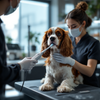
Ultrasonic Dog Teeth Cleaning in Grooming Salons: Safety, Risks & Protocols
, 41 min reading time
, 41 min reading time
A complete professional guide for groomers and salon owners on safe dog teeth cleaning. Learn ultrasonic dental hygiene protocols, risks, tools, pricing strategies and real case studies.
Dental hygiene has rapidly become one of the most requested and profitable add-on services in modern grooming salons and professional dog grooming salons. Pet owners actively seek alternatives to veterinary dental procedures performed under general anaesthesia, and ultrasonic dog teeth cleaning offered in a grooming salon environment is increasingly perceived as a safer, less intimidating entry point into oral care.
This growing demand places groomers and dog grooming salon professionals in a powerful but sensitive position: delivering visible results through ultrasonic dog teeth cleaning while carrying real responsibility for animal health, welfare, and ethical boundaries within the grooming salon setting.
However, dental cleaning is not just another cosmetic service. The mouth is one of the most biologically active and vulnerable areas of a dog’s body. Poor technique, incorrect tool selection, or a misunderstanding of professional boundaries can quickly turn a profitable service into a serious health risk.
This Groomica.eu guide is written specifically for professional groomers and grooming salon owners who want to offer dental hygiene services responsibly. We will clearly define where cosmetic hygiene ends and veterinary medicine begins, explain why ultrasonic technology is considered the safest foundation for salons, and expose the hidden risks of mechanical scaling that are often underestimated.
The goal of this article is not to discourage dental services in grooming salons, but to elevate them. With the right protocol, correct equipment, and ethical decision-making, dental hygiene can become a trusted, repeatable, and safe service that benefits both dogs and business.
Before introducing dental hygiene services, every groomer must clearly understand and accept one fundamental rule: grooming salons provide preventive and cosmetic oral care, not medical dental treatment. Confusing these roles is the most common reason groomers unintentionally cross professional and legal boundaries.
Clients often arrive with fear-based motivation. They are afraid of anaesthesia, concerned about veterinary costs, or simply hoping for a quick cosmetic fix. Without clear communication, they may assume that a grooming dental service replaces professional veterinary dentistry. It is the groomer’s responsibility to set expectations accurately and consistently.
From a professional standpoint, your role is limited but valuable. Preventive plaque management, surface-level calculus reduction, and oral hygiene education can significantly slow dental disease progression when done correctly. Attempting to treat advanced dental pathology, however, places the dog at risk and the groomer at liability.
Establishing this boundary protects everyone involved: the dog, the client, and your business. It also builds long-term trust, as clients learn that your recommendations are based on health rather than upselling.
Professional boundary definition:
Knowing when to refuse a dental cleaning is just as important as knowing how to perform one. If, upon lifting the dog’s lip, you observe severely inflamed or bleeding gums, visible abscesses, pus, fractured teeth, or noticeable tooth mobility, the procedure must stop immediately. Cleaning a diseased mouth can force bacteria into the bloodstream, potentially leading to systemic infection.
In these situations, the correct professional response is referral, not improvisation. Explaining calmly why veterinary care is required reinforces your credibility and positions your salon as a responsible partner in the dog’s overall health journey.
Before offering any form of dental hygiene service, groomers must understand the basic structure of a dog’s mouth. Dental cleaning is not simply about removing visible yellow or brown deposits from teeth. Beneath the surface lies a complex system of gums, ligaments, bone, blood supply, and bacteria that reacts quickly to trauma, pressure, and infection.
Many grooming-related dental accidents happen not because of bad intentions, but because of incomplete anatomical understanding. Without knowing where cosmetic plaque ends and medical risk begins, it is easy to apply too much pressure, work too deeply, or ignore warning signs that indicate underlying disease.
Canine dental disease often progresses silently. Dogs rarely show pain until advanced stages, which means the visual appearance of the teeth alone can be misleading. A mouth that looks “dirty but manageable” may already have inflammation below the gumline that should never be disturbed outside a veterinary setting.
For groomers, anatomy knowledge is not about performing advanced dentistry. It is about recognising safe zones, understanding biological limits, and knowing exactly when to stop.
Key anatomical elements every groomer must understand:
For grooming salons, the golden rule is simple: stay above the gumline, work gently, and never attempt to “dig” beneath the gums. Any procedure involving subgingival calculus, probing, or bleeding immediately crosses into veterinary medicine.
Dental hygiene services have exploded in popularity within grooming salons over the last decade. Pet owners are increasingly aware of the link between oral health and systemic disease, yet many are hesitant about veterinary dental procedures performed under general anaesthesia. This creates a strong demand for non-anesthetic alternatives.
From a business perspective, dental cleaning is attractive. It is visually rewarding, easy to explain, and can significantly increase the average transaction value of each grooming visit. When positioned correctly, it also encourages repeat visits and long-term client relationships.
However, this demand creates pressure. Groomers may feel compelled to deliver dramatic “before and after” results, sometimes at the expense of safety. Without strict protocols, salons risk normalising procedures that should never be routine.
Understanding why this service is risky allows salon owners to design systems that protect both animals and staff while still meeting client expectations.
Why clients actively seek grooming-based dental services:
Why groomers must proceed with caution:
In modern professional grooming environments, ultrasonic dental cleaning has become the safest and most widely accepted foundation for non-anesthetic oral hygiene. Unlike mechanical scaling, ultrasonic technology works without scraping, vibration, or audible noise, making it significantly more tolerable for dogs.
For groomers, ultrasonic devices reduce the need for physical force and minimise the risk of accidental trauma. This is particularly important when working with awake animals that may move unpredictably during the procedure.
Ultrasonic cleaning also aligns perfectly with the groomer’s role as a hygienist rather than a dental technician. It focuses on bacterial management and surface hygiene rather than aggressive calculus removal.
Because of these characteristics, ultrasonic systems are especially recommended for groomers who are new to dental services or who want to minimise risk in a busy salon environment.
Why ultrasonic cleaning is considered the safest option:
Ultrasonic dental cleaning is often misunderstood as a “gentle version of scraping,” but its mechanism is entirely different. Understanding how it works helps groomers trust the process and explain it confidently to clients.
The system relies on ultrasonic waves transmitted through a conductive medium, usually a combination of water and specially formulated toothpaste. These waves generate microscopic bubbles that rapidly expand and collapse — a phenomenon known as cavitation.
This cavitation disrupts bacterial colonies and weakens plaque and tartar structures without direct mechanical force. Importantly, the process occurs not only on the visible surface of the tooth but also along the gum margin.
For groomers, this means effective cleaning with minimal physical intervention, reducing stress for both the dog and the operator.
Key functional principles:
Because no brushing or scraping motion is required, groomers should resist the urge to “help” the device by applying pressure. Correct ultrasonic use is passive: position, hold, and allow the technology to work.
One of the most overlooked advantages of ultrasonic dental cleaning is its consistency. Unlike mechanical techniques, which depend heavily on hand skill and angle control, ultrasonic systems deliver predictable results when used correctly.
This makes them ideal for grooming salons with multiple staff members, varying experience levels, or high daily volume. Standardised protocols are easier to enforce, train, and audit.
From a safety perspective, ultrasonic tools dramatically reduce the risk of sudden injury if a dog moves unexpectedly. There are no sharp hooks or blades that can puncture soft tissue.
For salon owners, this translates into fewer incidents, lower insurance risk, and greater confidence in offering dental services at scale.
Key benefits for salon operations:
At this stage, we have established the biological foundation and identified ultrasonic cleaning as the safest baseline technology for grooming salons. In the next section, we will examine the opposite end of the spectrum: mechanical scaling, why it is still used, and why it carries serious hidden risks when performed outside a veterinary setting.
Mechanical dental scaling using metal instruments is one of the most controversial practices in grooming-based dental hygiene. Many groomers learn this technique informally, inherit it from “old school” mentors, or see it demonstrated online without full context. At first glance, it appears effective: large chunks of tartar are removed quickly, creating dramatic visual results.
However, speed and visibility do not equal safety. Mechanical scaling fundamentally differs from ultrasonic cleaning because it relies on force, leverage, and precise angle control. When performed on an awake animal without anaesthesia, even small errors can have lasting consequences.
The greatest danger of manual scaling lies not in what you can see, but in what you cannot. Damage to enamel, microtrauma to gums, and bacterial displacement often occur silently, only becoming apparent weeks or months later.
For grooming salons, mechanical scaling represents a high-liability technique that demands exceptional skill, perfect dog compliance, and clear ethical justification. It is never a “routine” option.
Why mechanical scaling is inherently risky in grooming environments:
One of the most underestimated risks of mechanical scaling is enamel damage. Tooth enamel is the hardest substance in the body, but once scratched or compromised, it does not regenerate. Even microscopic damage can permanently alter the tooth surface.
When a metal scaler is applied at an incorrect angle, it creates micro-scratches that are invisible to the naked eye. These scratches increase surface roughness, making the tooth more susceptible to rapid plaque accumulation.
Ironically, this means that a tooth may look “clean” immediately after scaling but become dirty again much faster than before. Clients may interpret this as “ineffective home care,” when in reality the enamel surface has been damaged.
In veterinary dentistry, mechanical scaling is always followed by polishing to smooth the enamel. Grooming salons almost never have access to appropriate polishing equipment, leaving the tooth in a vulnerable state.
Why enamel micro-damage matters:
Mechanical scaling places sharp instruments inside a living, moving mouth. Even well-trained dogs can react suddenly to discomfort, noise, or unfamiliar pressure. In these moments, injury can occur within fractions of a second.
Common injuries include cuts to the gums, punctures to the tongue, and abrasions to the inner cheeks. These injuries may bleed minimally at first but can become infected due to the high bacterial load of the oral cavity.
From a business perspective, even a minor oral injury can escalate into a major issue. Owners may notice bleeding hours later, associate it with the grooming visit, and lose trust permanently.
Additionally, groomers themselves are at risk. A startled dog can cause hand slips, resulting in self-injury or needle-like punctures from dental tools.
Common trauma risks associated with manual scaling:
Unlike ultrasonic cleaning, mechanical scaling can cause significant discomfort, especially when tartar extends close to or below the gumline. Without anaesthesia or analgesia, this discomfort is fully experienced by the dog.
Pain responses in dogs are often subtle. Lip licking, head turning, stiffening, or sudden withdrawal can all indicate discomfort. Continuing a procedure despite these signals raises serious ethical concerns.
Stress responses not only affect the dog’s wellbeing but also compromise safety. A stressed dog is far more likely to move suddenly, increasing injury risk for everyone involved.
From a professional standpoint, any dental procedure that causes pain should immediately prompt reassessment. Cosmetic benefit never justifies suffering.
Signs that mechanical scaling should stop immediately:
Despite its risks, there are limited situations where mechanical scaling may be considered acceptable within a grooming context. These situations are rare and require strict conditions to be met.
The calculus must be fully supragingival, loosely attached, and clearly visible. The dog must be exceptionally calm, accustomed to oral handling, and show no signs of gum inflammation or periodontal disease.
Even in these cases, mechanical intervention should be minimal, targeted, and immediately followed by protective measures such as enamel-supporting gels.
For most salons, especially those introducing dental services for the first time, mechanical scaling should not be part of the standard offering.
Mechanical scaling may be considered only if ALL conditions apply:
In modern grooming salons, professionalism is defined by restraint, not bravado. The decision to avoid risky techniques is not a limitation — it is a mark of expertise.
Ultrasonic cleaning provides a safe, repeatable, and ethically sound foundation for dental hygiene services. Mechanical scaling, while visually dramatic, introduces risks that far outweigh its cosmetic benefits in most grooming scenarios.
Clients may initially request “stronger” cleaning, but education changes expectations. When groomers explain why certain techniques are avoided, trust increases rather than decreases.
Long-term success in dental services comes from consistency, safety, and transparency — not from removing the most tartar in the shortest time.
Introducing dental hygiene services into a grooming salon without a clear protocol is one of the most common mistakes salon owners make. Dental procedures involve biological risk, client expectations, and legal responsibility, which means improvisation has no place in this service category. A structured protocol protects the dog, the groomer, and the business simultaneously.
This workflow is designed specifically for non-anesthetic grooming environments. It prioritises safety, predictability, and repeatability rather than aggressive cosmetic outcomes. When followed consistently, it allows dental hygiene to become a trusted maintenance service rather than a high-risk intervention.
Each step below builds on the previous one. Skipping or shortening stages often leads to stress, resistance, or unsafe decision-making later in the process. Salon owners should treat this protocol as a standard operating procedure (SOP) for staff training and quality control.
Importantly, this protocol assumes the use of ultrasonic technology as the primary cleaning method. Mechanical scaling is not considered a default part of this workflow.
Before any dental procedure begins, the client must clearly understand what the service is — and what it is not. Many disputes arise not from poor technique, but from mismatched expectations. A written consent form formalises understanding and protects both parties.
The waiver should explain that the service is cosmetic and preventive, not veterinary treatment. It should explicitly state that no diagnosis, subgingival cleaning, or medical intervention will be performed. This transparency builds trust rather than resistance.
Verbal explanation should always accompany written consent. Clients are far more likely to respect professional boundaries when they feel educated rather than dismissed.
From a business perspective, a signed waiver is not optional — it is a fundamental risk management tool.
Consent form should include:
A thorough visual examination determines whether it is safe to proceed. This step should never be rushed, even during busy salon days. Many dogs presented for dental cleaning should not receive it.
The examination focuses on visible indicators rather than diagnosis. Groomers are not assessing disease severity but identifying red flags that require referral.
Lighting is critical. Poor visibility increases the risk of missing inflammation or damage. Calm handling and minimal restraint help reduce stress during this assessment.
If any serious concerns are observed, the procedure must stop before it begins.
Do NOT proceed if you observe:
Dental hygiene is an intimate procedure. Even calm dogs may react defensively if rushed into mouth handling. Acclimatisation reduces resistance and dramatically improves cooperation.
This stage is particularly important for first-time dental clients. The goal is not to clean immediately, but to create positive association.
Ultrasonic systems are advantageous here because they are silent and vibration-free, reducing sensory overload.
Skipping acclimatisation often leads to head movement, stress, and unsafe working conditions.
Acclimatisation process:
Attempting to remove hardened deposits without preparation increases pressure, stress, and risk. Softening agents reduce the need for force and improve ultrasonic efficiency.
Dental gels and sprays formulated for dogs help loosen plaque bonds and reduce bacterial load. They also improve comfort during the procedure.
This step is often underestimated, yet it significantly affects outcome quality and procedure time.
Proper softening allows ultrasonic cleaning to work passively rather than aggressively.
Softening best practices:
This is the core cleaning phase. Unlike brushing or scraping, ultrasonic cleaning requires patience rather than motion. The most common mistake groomers make is trying to “help” the device.
The tool should be placed gently against the tooth surface and held still. Ultrasonic waves do the work beneath the surface through cavitation.
Pressure should be minimal. Increased force does not improve results and may increase discomfort.
Work methodically, tooth by tooth, prioritising comfort over speed.
Correct ultrasonic technique:
After ultrasonic cleaning, softened plaque may remain. This residue should be removed gently using non-abrasive materials.
This step improves visual results without introducing risk. It should never involve sharp instruments.
Gentle finishing also allows a final comfort check before concluding the procedure.
Safe finishing methods:
The final step supports enamel integrity and bacterial control after cleaning. Protective gels slow plaque reformation and soothe gum tissue.
This step also reinforces professionalism in the client’s eyes. It signals completion, not abrupt termination.
Post-care education increases long-term success and repeat bookings.
End-of-procedure actions:
At this point, the technical foundation of safe dental hygiene is complete. In the next section, we will shift focus to the tools and equipment required to perform this service professionally, efficiently, and safely at scale.
Dental hygiene services can only be as safe as the equipment behind them. Unlike coat grooming, where many techniques can be adapted creatively, oral hygiene leaves little room for improvisation. The mouth is a sensitive biological environment, and using inappropriate tools dramatically increases risk.
For salon owners, equipment decisions are not only technical but strategic. Investing in the right tools protects staff, reduces liability, and ensures that the service can be offered consistently across multiple groomers. Poor equipment choices, on the other hand, often lead to uneven results, stress, and eventually service discontinuation.
This section outlines the essential and recommended tools required to offer dental hygiene professionally, ethically, and at scale. The focus is on safety, efficiency, and long-term sustainability rather than short-term cost savings.
Importantly, this list assumes a non-anesthetic grooming environment and aligns with the hygienist—not veterinarian—role.
At the heart of a modern grooming-based dental service lies ultrasonic technology. This equipment replaces force-based techniques with physics-based cleaning, dramatically reducing the margin for error.
Ultrasonic systems designed for pets operate silently and without mechanical movement. This is crucial in grooming environments, where dogs are awake and unrestrained by medical sedation.
For salons introducing dental services for the first time, ultrasonic equipment is not optional—it is foundational. Attempting to build a service without it significantly increases ethical and operational risk.
Key features to require in an ultrasonic system:
Ultrasonic cleaning does not work in isolation. The technology relies on conductive media—typically a combination of water and specially formulated toothpaste—to transmit ultrasonic waves effectively.
Using inappropriate pastes can neutralise the ultrasonic effect or create residue that attracts plaque. Human toothpaste must never be used due to toxicity risks.
For groomers, paste selection affects not only cleaning efficiency but also dog acceptance. Flavour, texture, and foaming properties all matter.
Recommended product characteristics:
After ultrasonic cleaning, residual softened plaque may remain. Finishing tools should focus on gentle removal without introducing abrasion or trauma.
This stage improves visual outcomes while maintaining enamel integrity. Many grooming accidents occur when groomers attempt to “perfect” results using inappropriate tools.
Finishing should feel more like wiping than cleaning. If resistance is felt, the procedure should stop.
Safe finishing tools include:
Professional dental hygiene does not end when visible plaque is removed. Post-care products play a critical role in slowing plaque reformation and soothing oral tissues.
These products also enhance the perceived value of the service. Clients are more likely to rebook when they understand that protection continues after the appointment.
For salons, post-care products support structured maintenance programmes rather than one-off visits.
Common post-care products:
Equally important as knowing what to use is knowing what to avoid. Certain tools may appear effective but carry disproportionate risk in non-anesthetic settings.
These tools often originate from veterinary dentistry or human dental care and are inappropriate for awake animals in grooming salons.
Using such tools increases the likelihood of injury, enamel damage, and client complaints.
Tools to avoid in grooming environments:
From a business perspective, dental hygiene equipment should be treated as a long-term investment rather than an impulse purchase. Quality tools reduce staff stress, increase service consistency, and minimise liability exposure.
Ultrasonic systems typically represent the highest upfront cost, but they also enable safer delegation to trained staff and higher service frequency.
Salons that attempt to cut costs often face higher hidden expenses through refunds, injuries, or reputational damage.
Smart investment priorities:
With the right equipment in place, dental hygiene becomes a controlled, repeatable service rather than a high-risk experiment. In the next section, we will examine which dog breeds require the most frequent dental attention and why understanding breed-specific risk is critical for service planning.
Not all dogs develop dental problems at the same rate. Breed-related anatomy, skull structure, bite alignment, and saliva composition all influence how quickly plaque accumulates and how aggressively periodontal disease progresses. For grooming salons, understanding these differences is essential for both safety and service planning.
Many clients incorrectly assume that dental issues are linked only to age or diet. In reality, genetics and physical structure play a far greater role. Some dogs may develop significant tartar within months, while others remain relatively clean for years with minimal intervention.
For groomers, breed-specific awareness allows proactive recommendations rather than reactive damage control. It also helps justify maintenance programmes and repeat visits without appearing sales-driven.
Below are the primary risk groups every grooming professional should recognise.
Small and toy breeds represent the highest dental risk category in grooming salons. Their compact jaw structure leaves insufficient space for the full set of adult teeth, leading to overcrowding. This creates narrow gaps where plaque and bacteria accumulate rapidly.
Additionally, many small breeds retain deciduous (baby) teeth longer than appropriate, further worsening crowding. Reduced chewing force and softer diets often accelerate plaque formation.
Without consistent maintenance, these breeds can develop advanced dental disease at a very young age — sometimes as early as 2–3 years old.
For grooming salons, this group benefits most from early, gentle, and frequent hygiene interventions.
High-risk small and toy breeds include:
Brachycephalic breeds have shortened skulls but nearly the same number of teeth as longer-muzzled dogs. This anatomical mismatch leads to severe crowding, rotated teeth, and abnormal bite alignment.
These dogs often develop plaque in areas that are difficult to access without stress or manipulation. Their facial structure can also make oral handling more challenging during grooming procedures.
Many brachycephalic dogs suffer from chronic low-grade gum inflammation that may not be immediately obvious but worsens quickly if disturbed incorrectly.
For groomers, conservative techniques and frequent assessment are critical for this group.
Brachycephalic breeds with elevated dental risk:
Some breeds are genetically predisposed to malocclusion — misaligned bites where teeth do not meet correctly. This results in uneven wear, trapped debris, and increased plaque retention.
Retained baby teeth are particularly problematic, as they create unnatural pockets for bacteria and prevent proper spacing. These cases often appear cosmetically manageable but hide significant periodontal risk.
Groomers must be especially cautious not to disturb unstable teeth or inflamed gum tissue in these dogs.
Referral to a veterinarian is often necessary if retained teeth are suspected.
Breeds commonly affected by bite alignment issues:
Medium and large breeds generally experience slower plaque accumulation due to wider jaw spacing and stronger chewing mechanics. However, this does not mean they are immune to dental disease.
When dental problems develop in larger dogs, they often progress silently and may be more advanced by the time they become visible.
These dogs may tolerate grooming-based dental hygiene well, but they are also more likely to require veterinary dental intervention at later stages.
For salons, this group benefits from periodic maintenance rather than frequent cosmetic cleaning.
Common medium and large breeds seen in salons:
Age intensifies all breed-related dental risks. Puppies may have retained baby teeth, adults accumulate plaque based on anatomy and care, and seniors often experience gum recession and bone loss.
Groomers should never assume that dental hygiene is inappropriate for senior dogs. Instead, techniques must be adapted to comfort and tolerance.
Early intervention significantly reduces the need for invasive veterinary procedures later in life.
Age-related considerations:
Understanding breed-related dental risk allows grooming salons to offer targeted recommendations rather than generic advice. In the next section, we will examine how to structure dental hygiene as a profitable, ethical service — including pricing models, maintenance plans, and client communication strategies.
Dental hygiene is one of the rare grooming services that offers both strong visual impact and long-term health value. However, its success in a salon depends far less on technical execution than on how the service is positioned, explained, and priced. Many grooming businesses fail with dental services not because dogs resist them, but because clients misunderstand what they are paying for.
Ethical selling means aligning expectations with biological reality. Teeth did not become dirty overnight, and they will not stay clean forever after a single visit. When salons communicate this clearly, clients are more receptive to maintenance-based pricing rather than one-time miracle solutions.
From a business perspective, dental hygiene works best as a recurring service layered into the grooming relationship. It should feel like preventative care, not an aggressive add-on.
The strategies below help salons grow average ticket value while preserving trust and professional credibility.
The first dental hygiene appointment is fundamentally different from all future sessions. Plaque and tartar accumulation may be significant, dog tolerance is untested, and more time is required for acclimatisation and assessment.
Treating the first visit as a standard session often leads to underpricing, rushed procedures, and staff frustration. Separating initial and maintenance visits creates clarity for both groomers and clients.
Clients generally accept higher pricing when they understand that the first visit involves evaluation, preparation, and adaptation rather than simple cleaning.
Maintenance visits then become easier, faster, and more predictable.
Recommended pricing structure:
Dental hygiene delivers the best results when performed regularly. Instead of pushing clients to book ad-hoc cleanings, salons should guide them into structured maintenance programmes.
These programmes reduce plaque buildup before it hardens into tartar, minimising stress for the dog and effort for the groomer. Over time, dogs become more tolerant, and sessions become faster and safer.
From a business standpoint, maintenance programmes stabilise income and reduce seasonal fluctuations.
Clients appreciate predictable scheduling and cost transparency.
Examples of ethical maintenance models:
Dental cleaning is a highly visual service, which makes before-and-after photos a powerful communication tool. However, visuals can also create unrealistic expectations if not contextualised properly.
Clients may compare their dog’s results to extreme online examples without understanding differences in dental health, age, or anatomy. This can lead to dissatisfaction even when the procedure was performed correctly.
The key is to use visuals as educational tools rather than sales tricks. Showing progress over time reinforces the value of maintenance rather than one-off transformations.
Best practices for visual communication:
Common objections often stem from misinformation rather than resistance. Clients may ask why teeth are not perfectly white, why bleeding was avoided, or why a veterinarian is sometimes recommended instead.
These moments are opportunities to reinforce expertise rather than defend pricing. Calm, confident explanations position the salon as a trusted advisor rather than a service provider under pressure.
Clear language and consistent messaging across staff prevent mixed signals.
Common client concerns and professional responses:
Dental hygiene should never depend on one charismatic groomer. For the service to scale, staff must share the same language, ethics, and confidence.
Training should focus on explanation skills as much as technical execution. When groomers understand why certain techniques are avoided, they communicate boundaries more convincingly.
Salon owners should encourage staff to refuse procedures when necessary without fear of financial penalty.
Staff training priorities:
With ethical pricing and communication in place, dental hygiene becomes a relationship-building service rather than a transactional upsell. In the next section, we will explore real-world case studies that illustrate both success stories and cautionary examples from grooming salons.
Case studies provide critical insight into how dental hygiene services function in real grooming environments. While protocols and equipment create a strong foundation, outcomes ultimately depend on judgement, communication, and consistency. The following five scenarios reflect common situations faced by professional groomers and salon owners.
Each case demonstrates a different challenge — from client expectations to dog behaviour and ethical decision-making. Together, they illustrate why dental hygiene is not a one-size-fits-all service and why restraint often leads to better long-term results.
These examples are anonymised but reflect real patterns observed across professional grooming salons.
A 4-year-old Pomeranian was presented for grooming with heavy visible plaque on the upper canines and premolars. The owner requested “full cleaning” but expressed fear of anaesthesia and veterinary dentistry. On examination, gums were pale pink with no bleeding, swelling, or obvious periodontal pockets.
The temptation in such cases is to aggressively remove tartar for dramatic visual results. Instead, the salon followed a conservative ultrasonic-only protocol focused on hygiene rather than perfection.
Approach taken:
Outcome:
Key lesson: Long-term maintenance delivers better results than aggressive one-time cleaning.
A client brought in a 7-year-old Shih Tzu with heavy calculus and visibly inflamed gums. The owner specifically requested scraping, citing another salon’s previous approach. Upon examination, bleeding was present even with minimal lip lifting.
Despite client pressure, the groomer refused to perform dental cleaning and recommended veterinary evaluation. Clear communication prevented conflict.
Decision factors:
Outcome:
Key lesson: Saying “no” protects health and builds credibility.
A 2-year-old Chihuahua with minimal plaque but extreme sensitivity to handling was booked for dental hygiene as a preventive measure. Previous grooming experiences had been stressful for the dog.
Rather than attempting full cleaning immediately, the salon prioritised acclimatisation over results.
Adapted protocol:
Outcome:
Key lesson: Behavioural pacing is part of professional hygiene care.
A Miniature Schnauzer presented with rapid plaque recurrence despite “recent dental cleaning” at another salon. Teeth appeared rough, and plaque accumulation was uneven.
Upon discussion, it was revealed that metal scaling had been used without polishing. The salon switched to ultrasonic maintenance and enamel-supporting gels.
Corrective approach:
Outcome:
Key lesson: Enamel damage accelerates future dental problems.
A medium-sized grooming salon wanted to introduce dental hygiene across a team of five groomers. Previous attempts failed due to inconsistent results and staff hesitation.
The salon invested in ultrasonic systems, created a written SOP, and standardised pricing and communication.
Implementation steps:
Outcome:
Key lesson: Standardisation enables safe scaling.
These case studies demonstrate that success in grooming-based dental hygiene comes from judgement, not force.
Dental hygiene services often raise complex questions among grooming professionals. The overlap between cosmetic care and medical dentistry creates uncertainty, especially for salon owners who want to grow responsibly without exposing themselves to unnecessary risk.
This FAQ section addresses the most common and important questions groomers ask when introducing or refining dental hygiene services. The answers are intentionally clear, conservative, and aligned with current best practices in non-anesthetic grooming environments.
These responses are designed not only for internal training but also to support client education and transparent communication.
In most countries, groomers are allowed to provide cosmetic and preventive dental hygiene, provided no medical treatment is performed. This includes surface plaque management above the gumline. Subgingival cleaning, diagnosis, extractions, and treatment of disease are strictly veterinary procedures. Groomers must clearly communicate this boundary to clients.
Yes, ultrasonic cleaning designed for pets is considered the safest non-anesthetic option when performed correctly. It works without scraping, vibration, or noise, making it well tolerated by most dogs. Safety depends on correct technique, proper assessment, and refusal when red flags are present.
Mechanical scraping carries significant risks in awake dogs, including enamel damage, gum injury, pain, and bacterial spread. Unlike veterinary dentistry, grooming salons do not polish teeth after scaling, leaving enamel rough and vulnerable. For this reason, scraping should never be routine.
A groomer should refuse dental cleaning if there is bleeding, severe redness, pus, loose teeth, fractures, strong odour, or signs of pain. In these cases, disturbing the mouth can worsen infection and cause systemic complications. Referral to a veterinarian is the correct professional response.
Frequency depends on breed, age, and anatomy. Small and brachycephalic breeds often benefit from maintenance every 4–6 weeks. Larger breeds may require less frequent care. Consistency is more important than intensity.
No. Grooming-based dental hygiene is preventive and cosmetic, not curative. It can slow plaque buildup and support oral comfort but cannot treat periodontal disease. Veterinary dental care remains essential when disease is present.
Without anaesthesia, it is neither safe nor ethical to remove deep or subgingival tartar. Whitening expectations must be adjusted to what is achievable through hygiene alone. Healthy gums and reduced plaque are more important than colour.
Yes, when adapted appropriately. Senior dogs often benefit from gentle maintenance that prioritises comfort and avoids stress. However, they also have a higher likelihood of underlying disease, making careful assessment essential.
Yes. Small, toy, and brachycephalic breeds are genetically predisposed to rapid plaque accumulation due to jaw structure and crowding. Early and regular hygiene significantly reduces long-term dental complications in these dogs.
Clear scope definition, written consent forms, consistent protocols, and refusal criteria are essential. Groomers should never imply medical treatment or diagnosis. Transparency and documentation are the strongest forms of protection.
These answers reinforce a central principle: dental hygiene in grooming salons is about prevention, safety, and professionalism — not aggressive intervention. In the final section, we will summarise key takeaways and outline how salons can responsibly integrate dental hygiene into their long-term service strategy.
Dental hygiene in grooming salons is no longer a niche or experimental offering. It has become a legitimate, highly requested service that sits at the intersection of preventive care, client education, and business growth. When approached responsibly, it enhances not only oral health outcomes for dogs but also long-term trust between groomers and pet owners.
Throughout this guide, one principle has remained constant: restraint is professionalism. The most successful dental hygiene services are not built on aggressive results or dramatic transformations, but on consistency, safety, and respect for biological limits. Groomers who understand where their role begins and ends protect both their clients and their reputation.
Ultrasonic technology has emerged as the gold standard for grooming-based dental hygiene precisely because it aligns with these values. It reduces risk, improves dog tolerance, and allows salons to offer a repeatable service that can be scaled across teams without compromising welfare. In contrast, force-based techniques such as routine mechanical scaling introduce unnecessary danger in non-anesthetic environments.
Equally important is communication. Clear explanations, written consent, ethical pricing models, and honest referrals to veterinarians transform dental hygiene from a transactional upsell into a trusted preventive service. Clients who understand why certain things are avoided are more loyal than those promised unrealistic results.
From a business perspective, dental hygiene represents sustainable growth rather than short-term profit. Maintenance programmes, breed-specific recommendations, and staff training create predictable income while strengthening the salon’s professional identity. This is not about doing more procedures — it is about doing the right ones, consistently.
For grooming professionals willing to invest in education, correct equipment, and ethical standards, dental hygiene can become one of the most valuable services a salon offers. Not because it replaces veterinary care, but because it supports it — acting as the first line of prevention in a dog’s lifelong oral health journey.
To conclude this guide, the following key principles summarise what every grooming professional should carry forward when offering dental hygiene services. These are not trends or opinions, but practical standards drawn from real salon experience and risk-aware practice.
Groomica.eu is dedicated to providing experience-based education, practical protocols, and professional tools for modern grooming salons. Our guides are designed for real-world application — supporting groomers who want to grow their businesses responsibly without compromising animal welfare.
Through in-depth resources, curated equipment, and ongoing professional insight, Groomica.eu helps grooming professionals build services that are safe, ethical, and sustainable.
Dental hygiene is just one example of how knowledge, structure, and restraint transform grooming into a respected profession. When done correctly, professionalism becomes the most powerful marketing tool of all.


